
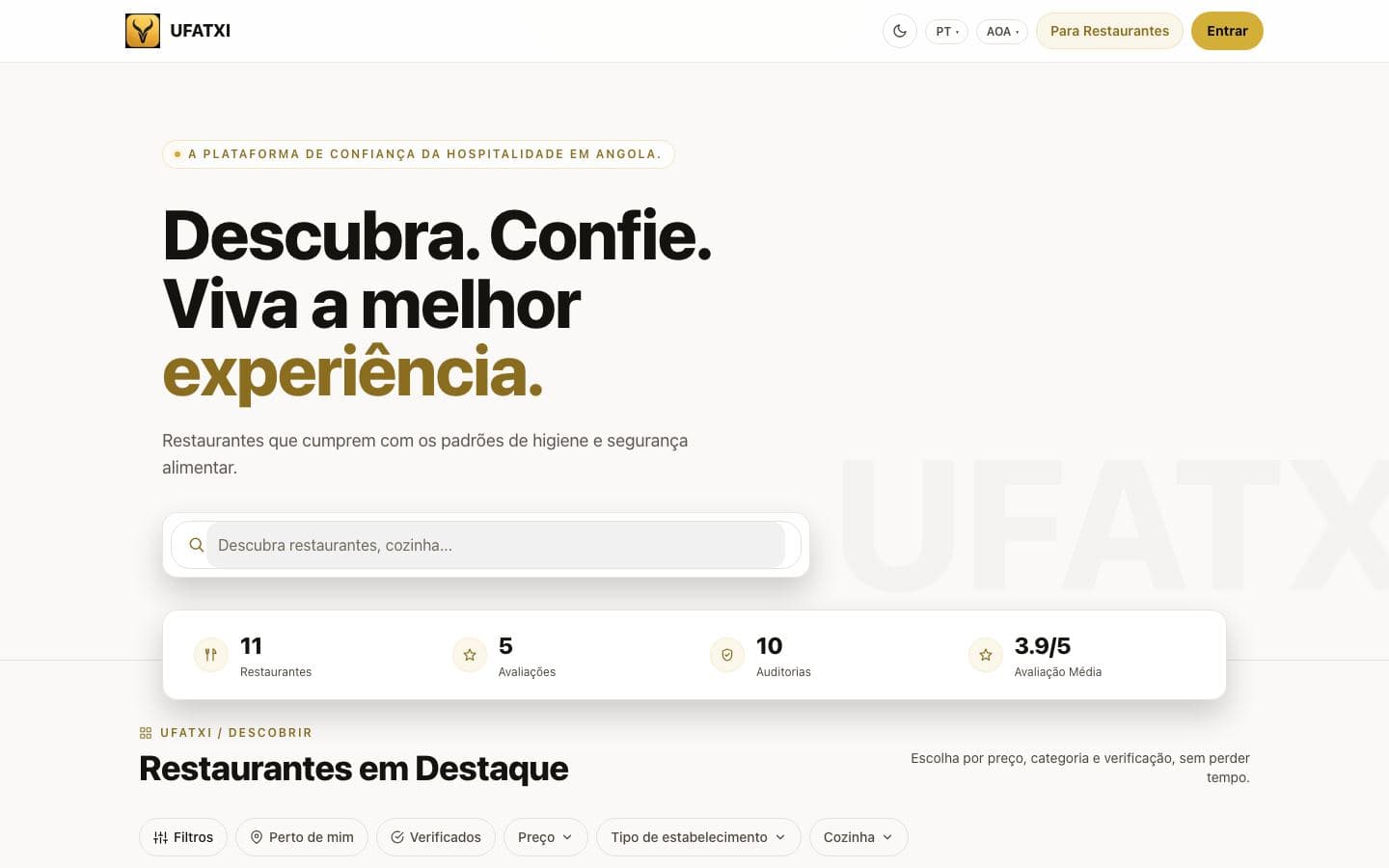
Diners in Angola had no reliable way to tell whether a restaurant meets hygiene standards, or whether its online reviews are genuine. UFATXI wanted a platform that combines reviews from people who actually visited with in-person hygiene audits by a food-safety specialist, and that rewards audited restaurants with a Verified Seal renewed every year.
Before development, a public poll run by UFATXI found around 90% of respondents in favour of the concept. An earlier prototype existed only as a reference for the product and brand: the platform was to be built from scratch.
Jall Technologies built the platform from the ground up. One web application serves four kinds of account, each with its own area and permissions: diners, restaurants, auditors and UFATXI's administrators. The whole interface works in four languages, and the same API serves a separate consumer mobile app.
- Reviews only from people who were there: a review can only be submitted within 50 metres of the restaurant, checked by GPS on the server, with a daily limit per person
- Live scores across four criteria: hygiene, service, food and staff
- Verified Seal workflow: a restaurant requests an audit, an auditor inspects it with a HACCP checklist, and an approved seal is valid for one year
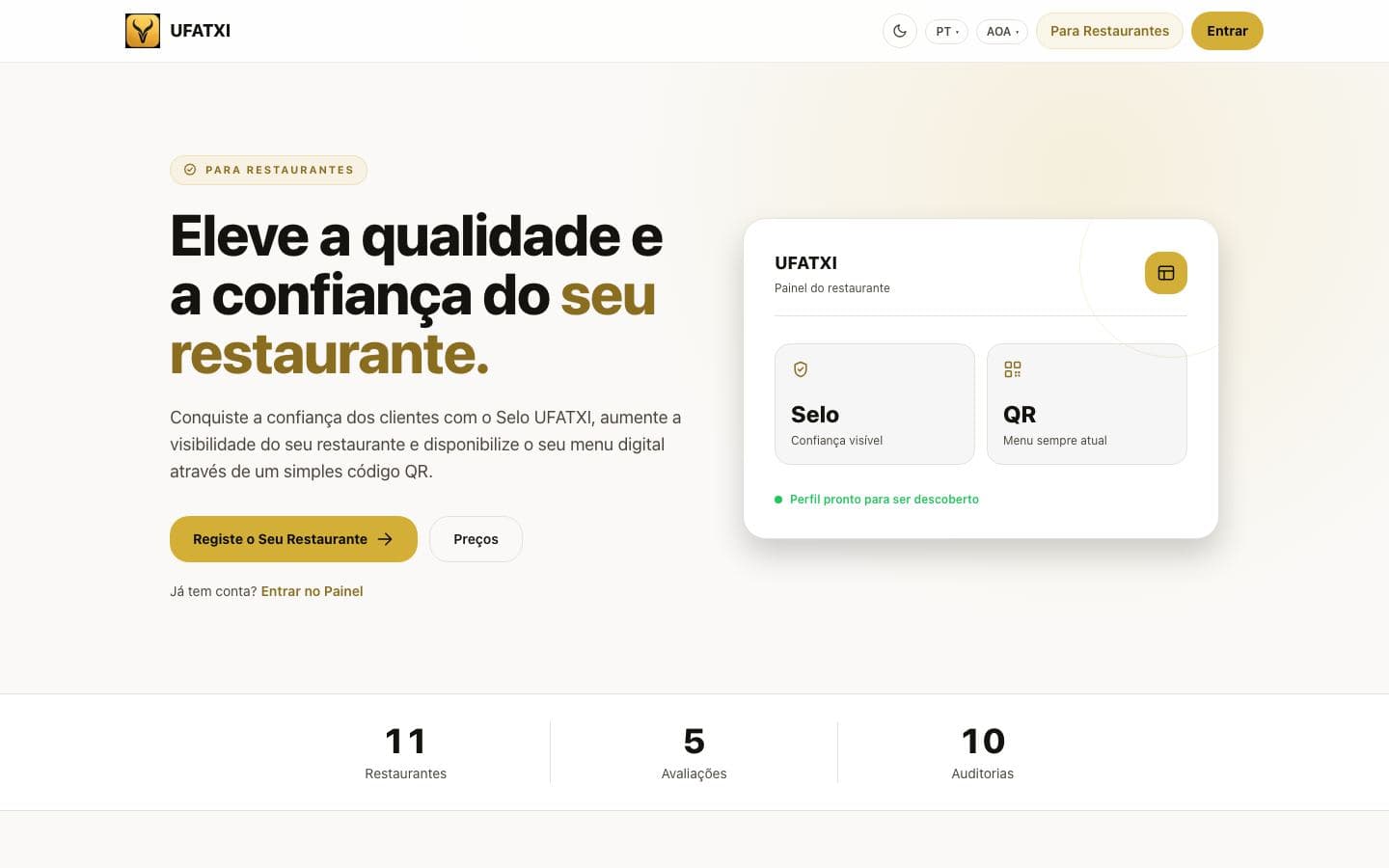
- Restaurant dashboard for the profile, menu, photos, audit requests and review history
- A digital menu for every restaurant, opened from its own QR code and always up to date
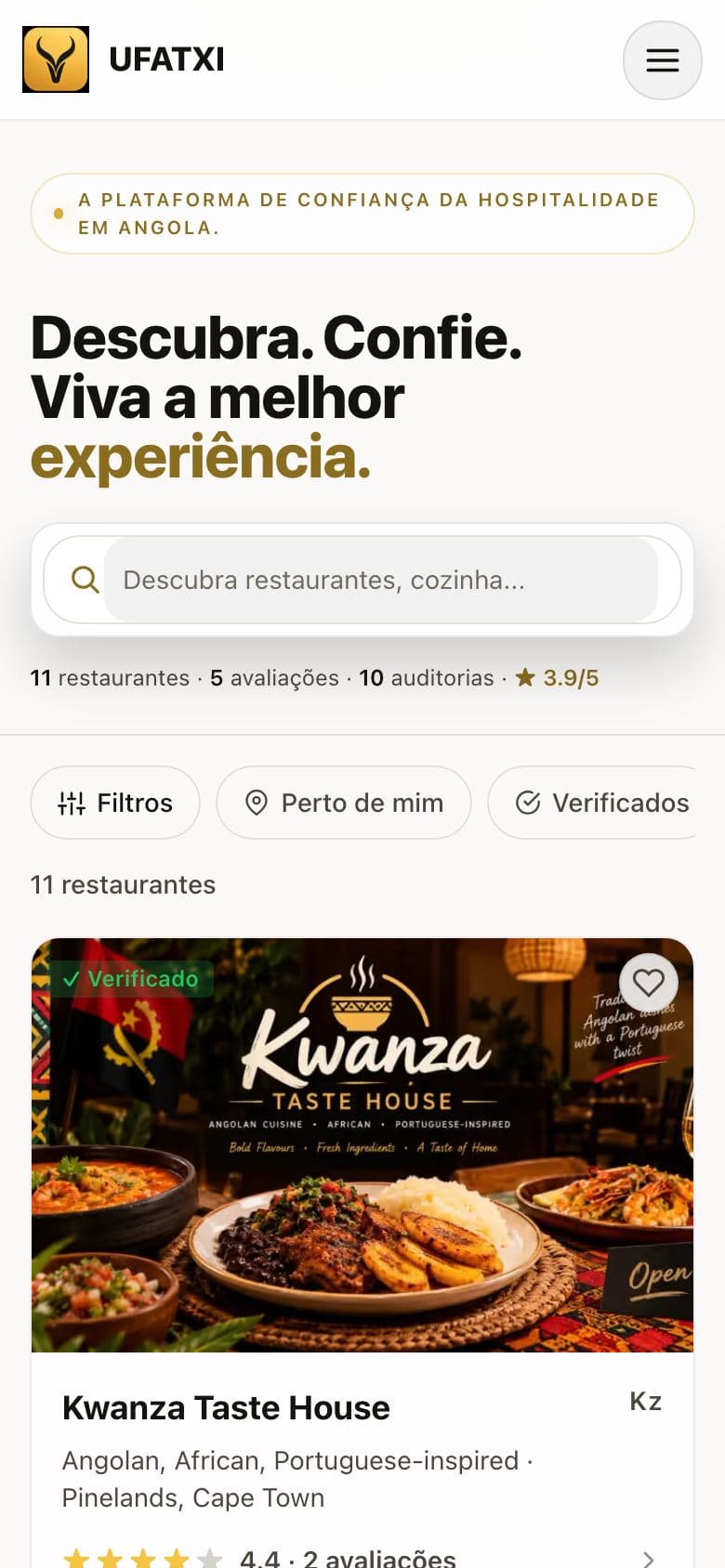
- Search and filters by name, area, city, score, seal and price range
- A complaints channel separate from reviews, with auditor assignment, restaurant responses, status history and notifications in each reader's own language
- Sign in with email, Google, Apple, Facebook or an SMS code for diners, and email sign in for restaurants, auditors and administrators
- Interface in Portuguese, English, French and Spanish
- Multicaixa Express payment flow for audit fees, the Verified Seal and premium profiles
- 1A Next.js web application for diners, restaurants, auditors and administrators, installable as a progressive web app
- 2One API shared by the web application and the consumer mobile app (Expo, React Native)
- 3A PostgreSQL database on Neon, accessed through Prisma
- 4Role-based access: four account types, each limited to its own area and actions
- 5Location checks and rate limits enforced on the server, never trusted from the device
- 6Automated tests on critical routes, and a pipeline that runs linting, type checks, tests and a build on every change